
Refined Foundations: A Dining Room Reimagined

Photography Credit: Adam Pass
How Thoughtful Layering Elevated What Already Existed
When RCQ Design was tasked with refreshing this dining room, the challenge lay not in starting over, but in building upon what already existed. With key furniture pieces and lighting in place, the mission became one of elevation — transforming the space into something more modern, cohesive, and visually compelling. Positioned at the heart of the home’s circulation, the room needed to strike a balance between presence and continuity, ultimately becoming a seamless yet distinctive moment within the larger design.
The Goal
Rather than starting from scratch, this project began with intention. The client asked that we design the room around her existing dining table, chairs, and light fixture — pieces she already loved and wanted to preserve.
The goal became one of enhancement: to elevate and modernize these foundational elements, allowing them to feel refreshed, cohesive, and fully realized within the space.
The Scope
While focused on a single room, the scope required a carefully layered approach. Each addition needed to complement the existing pieces while bringing new depth and refinement.
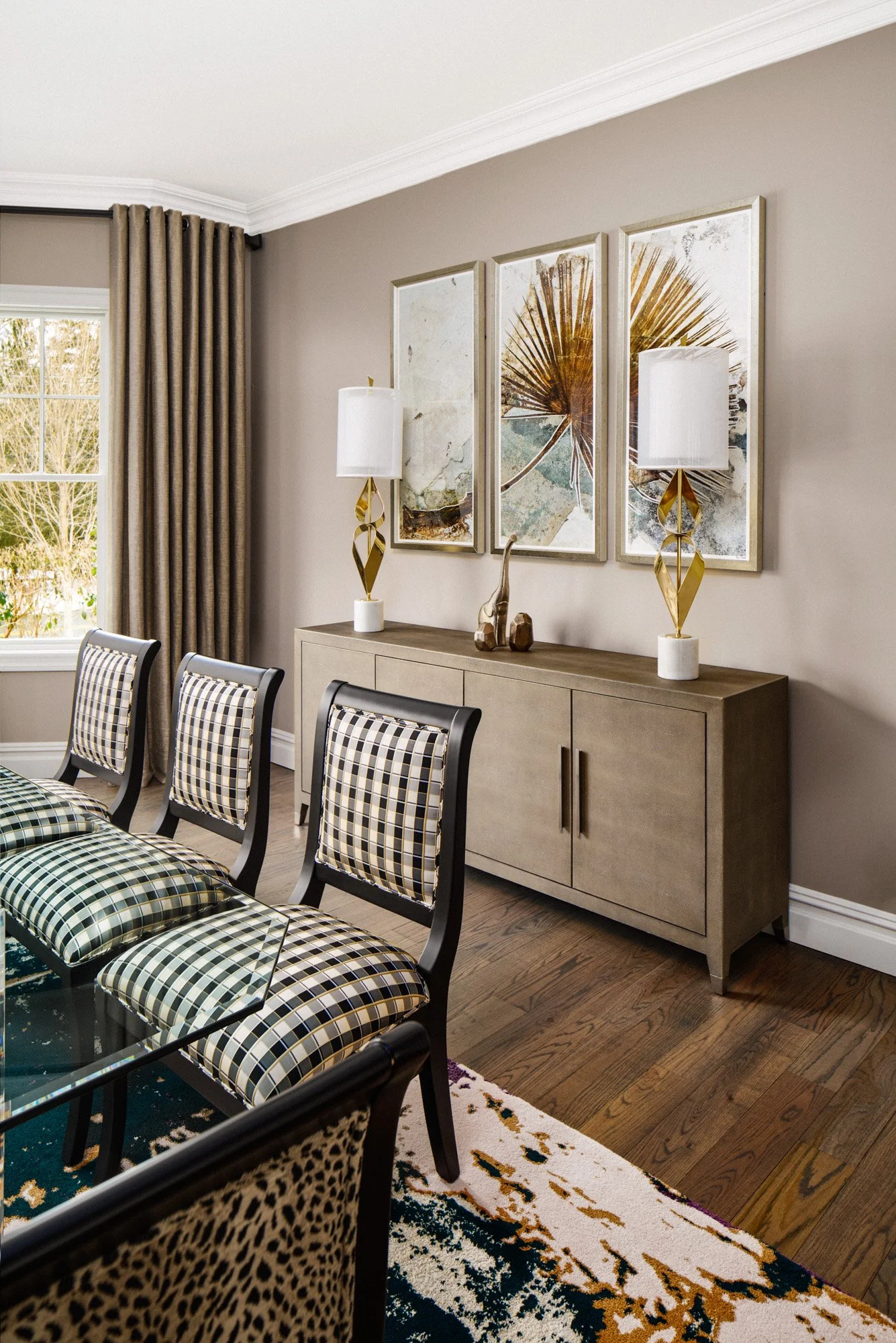
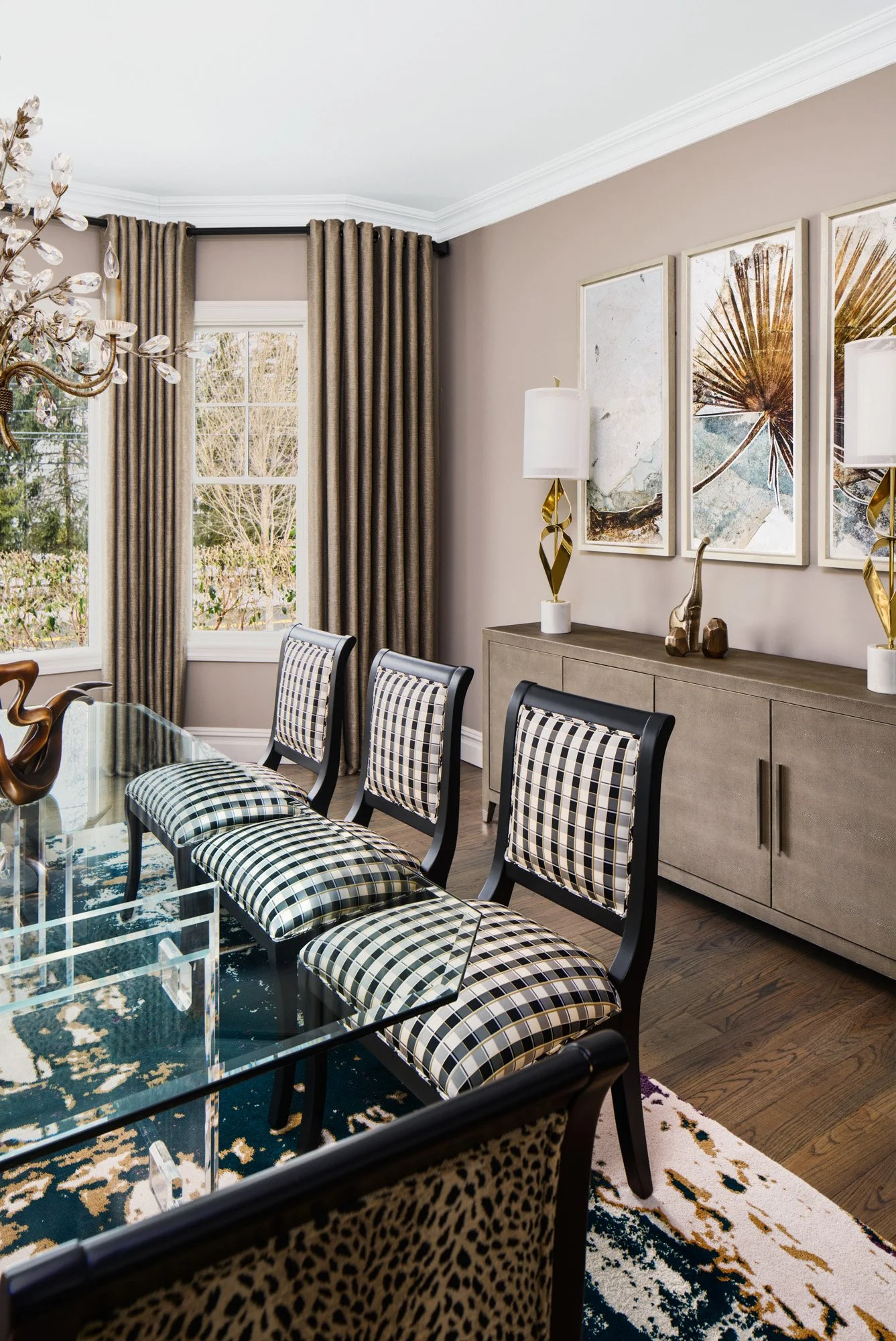
A custom area rug introduced both color and movement underfoot, while curated wall art and accessories added dimension and personality. Tailored window treatments softened the architecture, and a metal-wrapped floating shelf brought in a subtle, contemporary edge — balancing warmth with structure.
The Interior Design Aesthetic
Positioned along the home’s main thoroughfare, the dining room needed to feel both impactful and connected — a space that could stand on its own while seamlessly flowing into the surrounding areas.
A palette of cool neutrals was used to wrap the room in quiet sophistication, allowing texture to take the lead. Layered finishes — from soft textiles to warm metallic accents — created visual interest without overwhelming the eye.
Grounding the space, the area rug introduced a controlled pop of color, tying together the tones of the room while giving it a distinct identity within the larger home.
Phases of Design
Working Within the Framework
With the primary furniture pieces already established, the design began by evaluating proportions, tones, and materials — ensuring every new element would enhance rather than compete.Layering Texture & Color
The custom area rug became a pivotal moment in the dining room design, setting the palette and introducing movement. From there, textiles and finishes were selected to build cohesion and depth.Curating the Walls
Wall art selection required a careful balance — pieces needed to feel connected without becoming repetitive or visually overwhelming. Each wall was considered in relation to the next.Final Styling
Accessories, lighting accents, and finishing touches were layered in to complete the space, bringing warmth, polish, and a sense of intentionality throughout.
Favorite Part of the Job
The most rewarding part of the process was the color selection for the custom area rug. Reviewing and refining the pom options allowed for a highly tailored result — one that ultimately anchored the entire room, adding a layer of play, and informed the surrounding design decisions.
Least Favorite Part of the Job
The biggest challenge came in sourcing wall art. Finding pieces that not only resonated with the client but also worked together cohesively — without competing for attention across opposing walls — required a thoughtful and highly curated approach.
What Made This Job Unique
What set this project apart was the number of existing elements that needed to be honored. Rather than leading with new, statement furniture pieces, the design had to respond to what was already in place.
This introduced a different kind of creativity — one rooted in refinement, coordination, and restraint. It was less about reinvention and more about reimagining, proving that with the right layering, even familiar pieces can feel entirely new.
In the end, the room feels effortless — a seamless blend of existing and new, where every detail works together to create a space that is both elevated and deeply personal.